The letters to the seven churches in the Book of Revelation were written to real cities — and remarkably, all seven can still be visited today. They lie within a few hours' drive of one another in western Turkey, which means a single journey can take you to every one. This guide shows where each church is now, how to reach it, and what remains to see.
If you are new to the subject, start with our complete guide to the Seven Churches of Revelation. Here we focus on one practical question: where are they today, and can you actually go?
The seven churches on a modern map
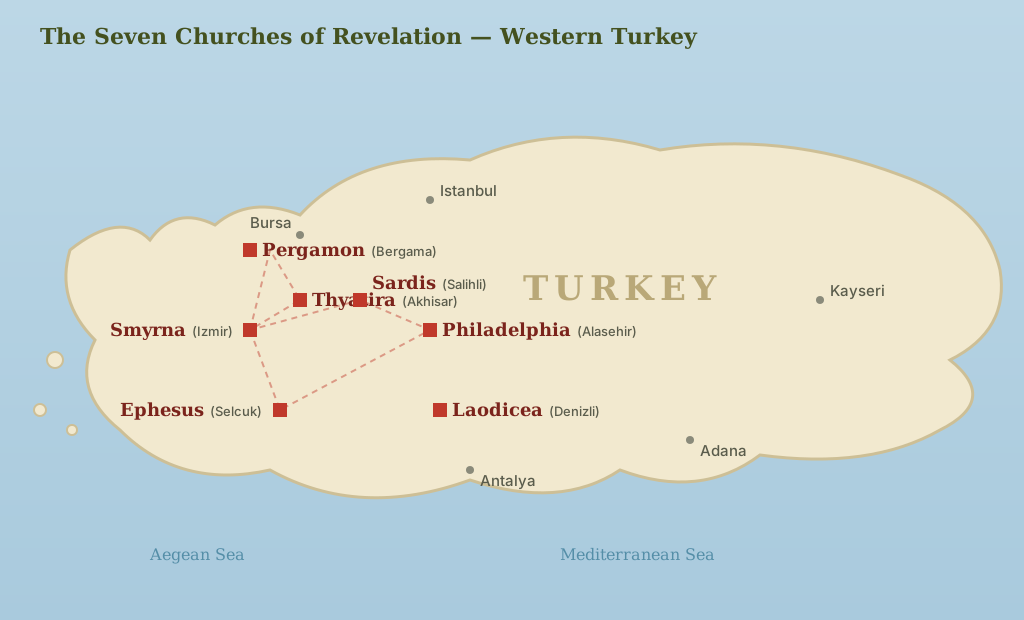
All seven cities sit in the provinces of Izmir, Manisa and Denizli, in the west of Turkey. Ancient Smyrna is modern Izmir, the natural gateway with an international airport. From there the sites form a loop to the north and east, none more than about a two to three hour drive from the next. In order, the modern locations are: Izmir (Smyrna), Selcuk near Izmir (Ephesus), Akhisar (Thyatira), Bergama (Pergamon), Salihli (Sardis), Alasehir (Philadelphia) and Denizli near Pamukkale (Laodicea).
Ephesus — today near Selcuk, Izmir Province
Ephesus is the easiest of the seven to reach and the most spectacular to see. The ruins lie just outside the town of Selcuk, about an hour south of Izmir. This is a UNESCO World Heritage Site with a marble street, the Library of Celsus and a great theatre. Nearby are the Basilica of St. John and the House of the Virgin Mary.
Smyrna — today the city of Izmir
You do not travel to Smyrna; you arrive in it. Modern Izmir, Turkey's third-largest city, stands directly on the ancient site. Its international airport makes Izmir the usual starting point for a seven churches journey. The restored Roman agora sits in the city centre.
Pergamon — today the town of Bergama
Pergamon rises above the modern town of Bergama, about two hours north of Izmir. A cable car carries visitors up to the acropolis, where the theatre and the foundations of the Altar of Zeus command the valley below.
Thyatira — today the town of Akhisar
Thyatira is the most urban of the sites: its ruins sit within the busy town of Akhisar, roughly an hour and a half north-east of Izmir. The excavated area is compact but moving, set right among everyday streets.
Sardis — today near Salihli
Sardis lies near the town of Salihli, about an hour east of Izmir. It is one of the richest sites to walk, with a vast restored gymnasium and one of the best-preserved ancient synagogues in the world.
Philadelphia — today the town of Alasehir
Philadelphia is now Alasehir, a little further east. The remains are modest — the pillars of a Byzantine basilica standing among the modern town — but the setting is quietly powerful for the only other church, with Smyrna, to receive no rebuke.
Laodicea — today near Denizli and Pamukkale
Laodicea sits just outside Denizli, next to the famous white terraces of Pamukkale. Extensive excavation has reopened its streets, theatres and the stone water pipes that inspired the warning against being lukewarm. Combining Laodicea with Pamukkale and nearby Hierapolis makes for one of the richest days of any tour.
Can you visit all seven in one trip?
Yes — and most visitors do. Because the cities form a loop around Izmir, a well-planned route reaches all seven comfortably, usually over several days with overnight stops. Spring and autumn offer the best weather for walking the ruins. Many travellers add Istanbul and Cappadocia at either end for a fuller picture of Turkey's Christian heritage.
See them for yourself
Reaching all seven independently means a lot of driving, planning and reading of maps. A guided tour removes the logistics and adds the one thing a map cannot: context. Our tours follow all seven churches with a licensed guide. If you would like to stand in these cities yourself, explore our Seven Churches tours and start planning your journey.